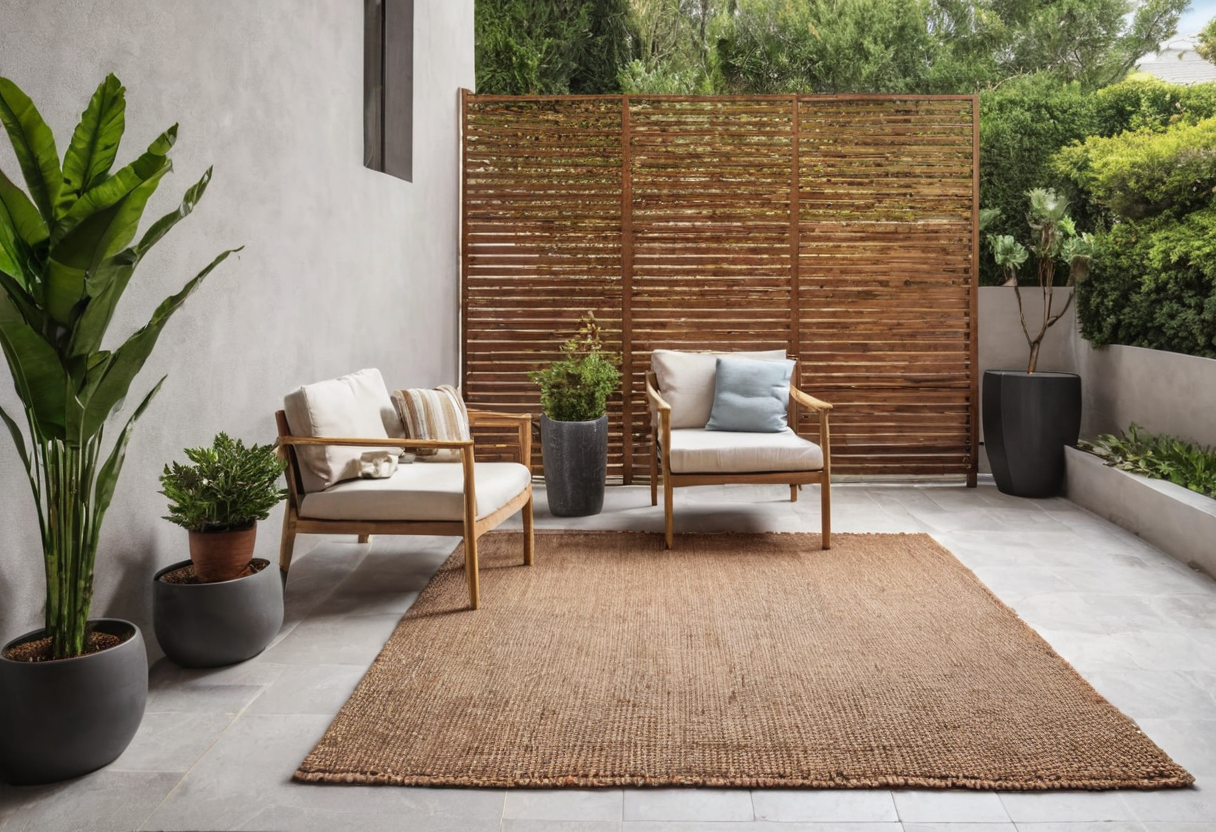
Visible Bases and Feet
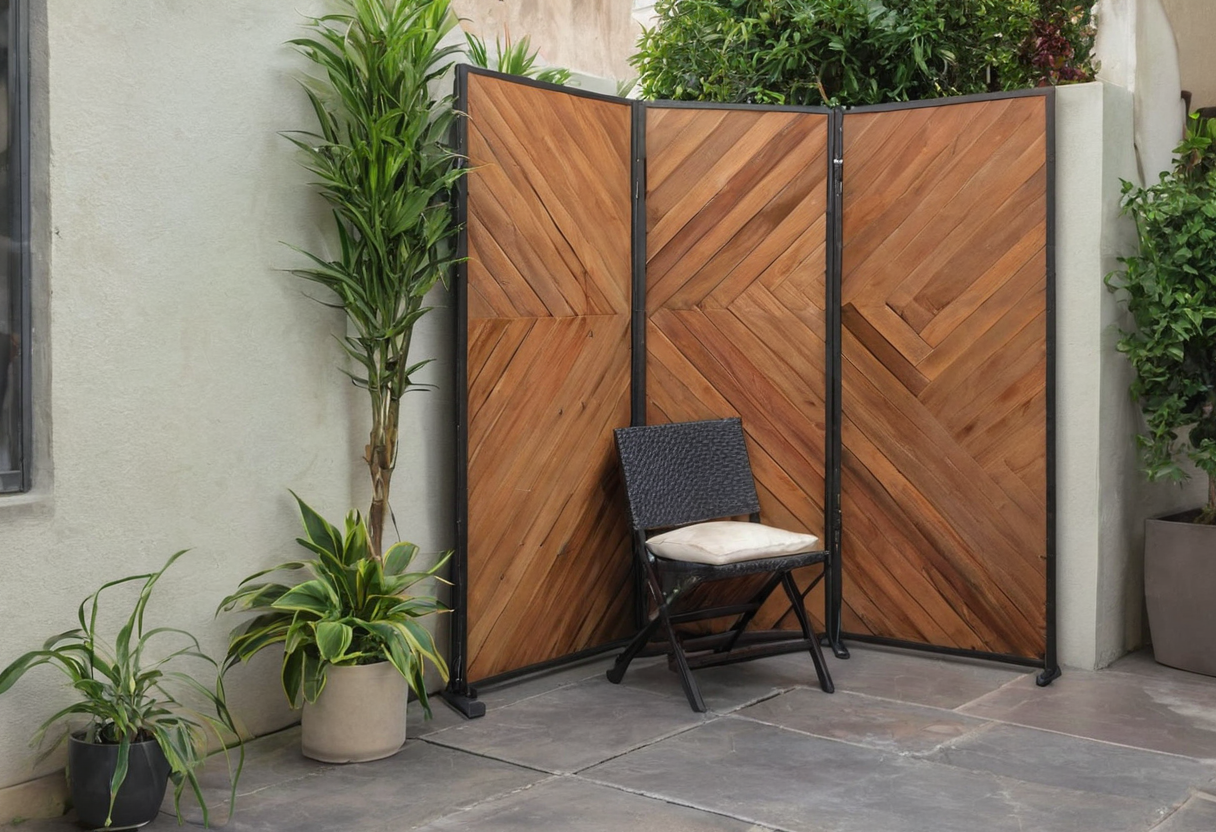
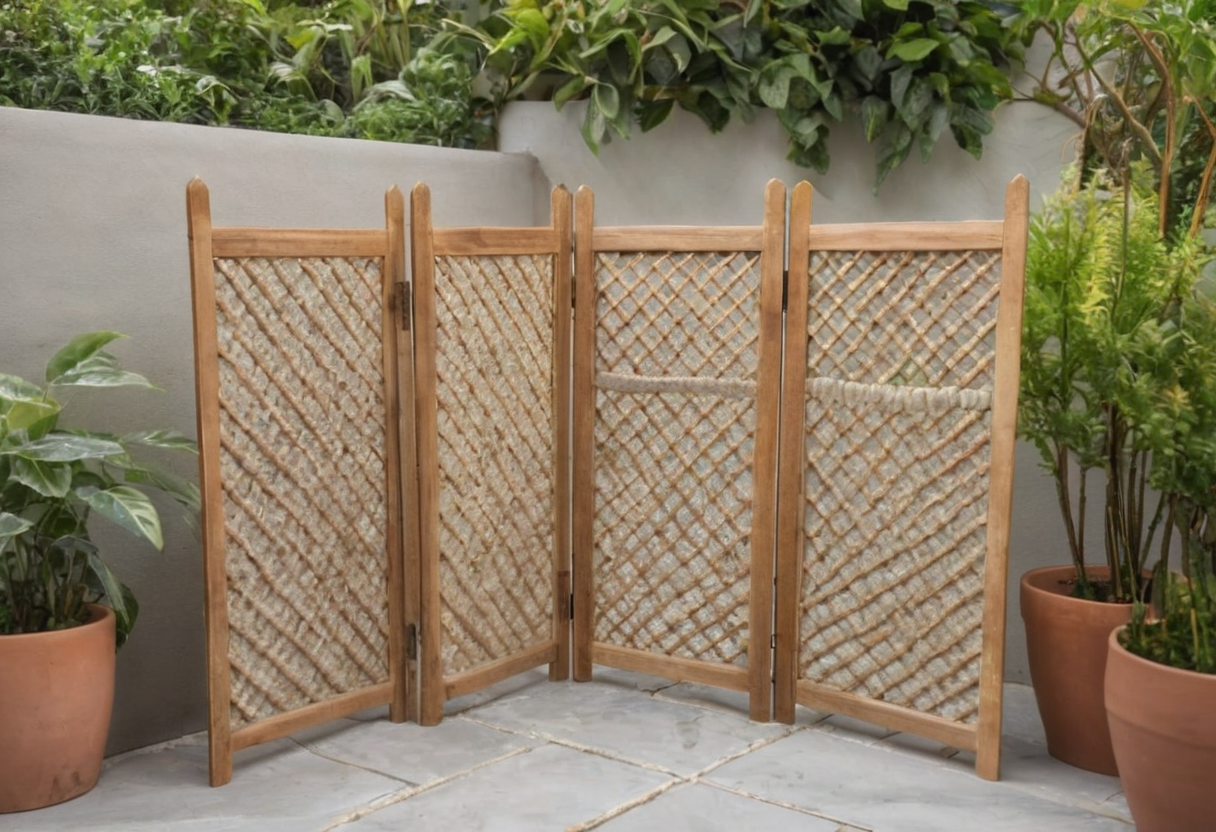
A clear visual distinction between a permanent boundary and a movable object lies in what rests on the ground. Sherri Ribbey documented building her own freestanding screen with a separate base for placement on a deck or patio, noting that alternative longer posts set in concrete would create a permanent version instead. The documented design has a separate base rather than posts buried in the ground. Similarly, IKEA styles its NÄMMARÖ privacy screen, article 205.327.43, as a freestanding unit intended to be moved between locations. The published assembled dimensions are 31 1/2 inches wide by 19 5/8 inches deep by 55 1/8 inches high, and the product imagery displays the screen standing on its own base alongside outdoor furniture.
Relation to Chairs and Tables
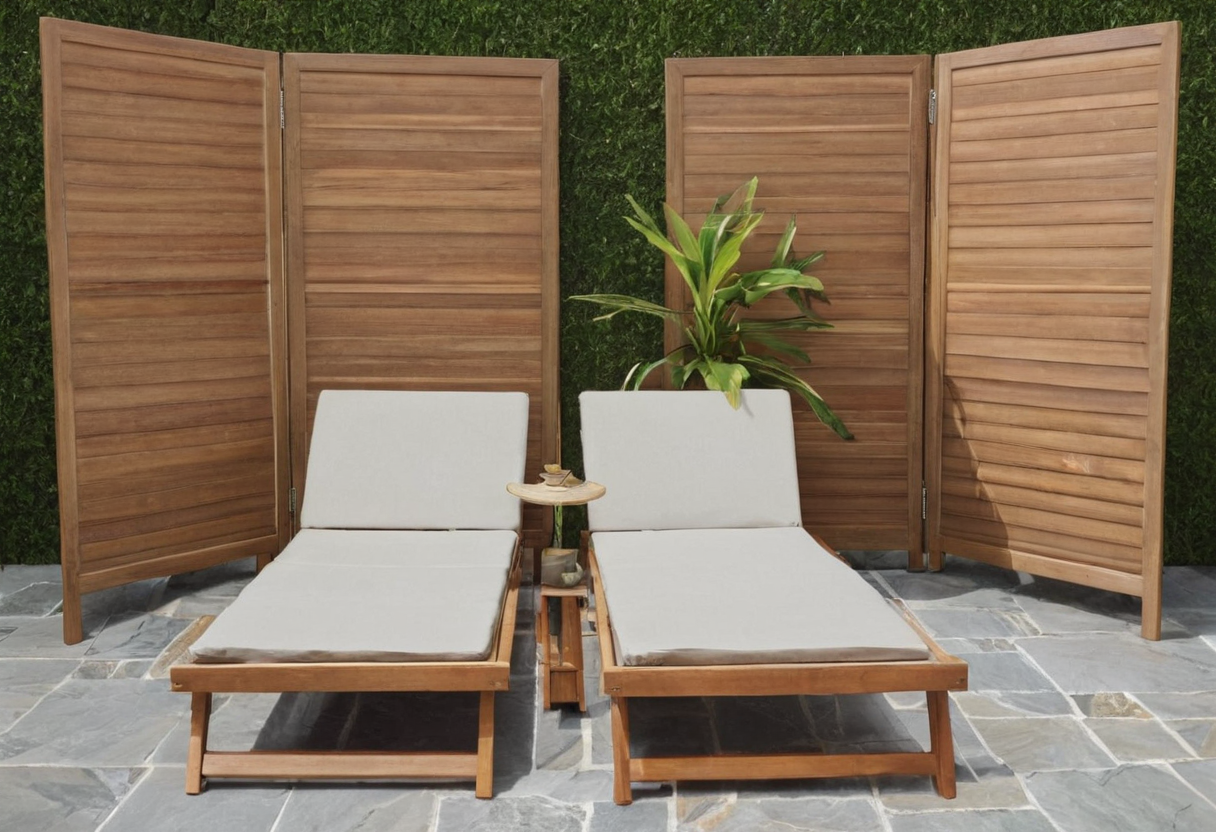
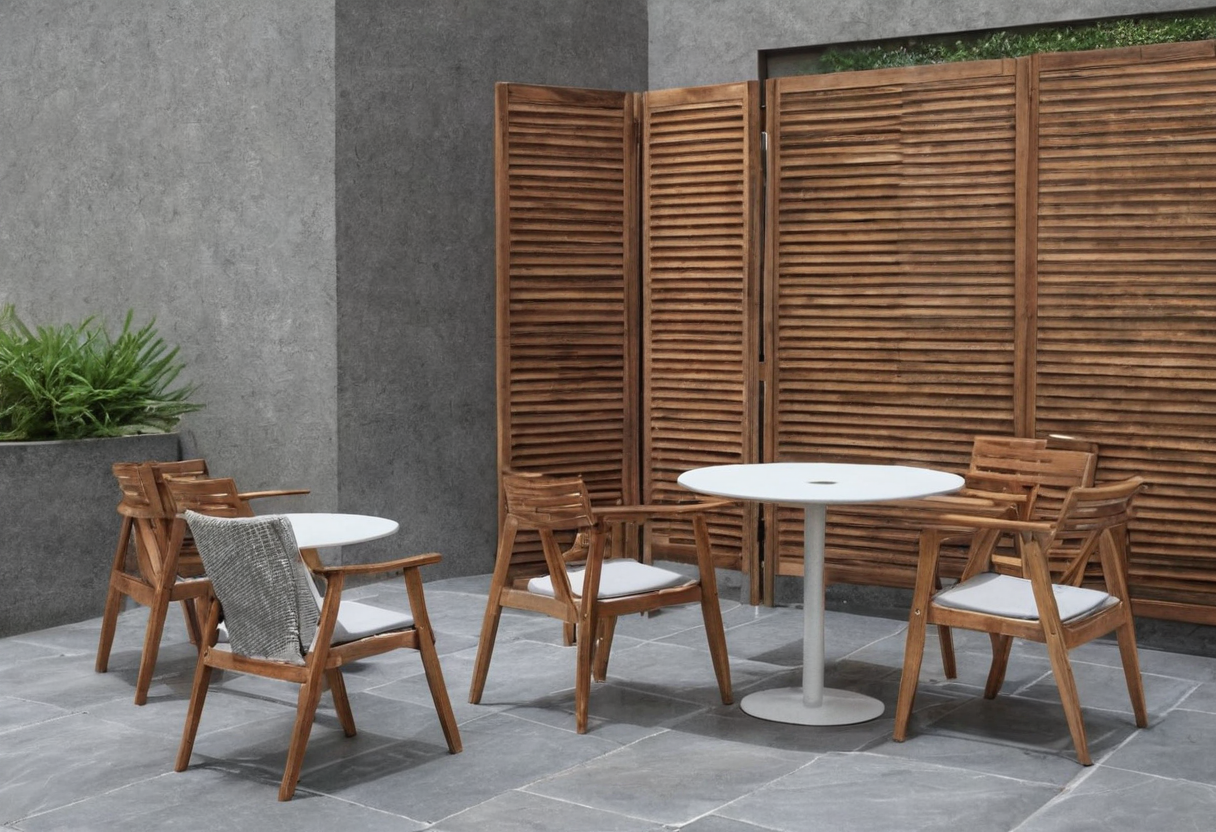
Like an exterior rug, a freestanding screen occupies part of the patio floor, and its position can be read beside chairs and small tables. In the maker’s styled patio scene, the screen appears among other outdoor furnishings. A gate, by contrast, serves a circulation function. A gate marks a passage; published gate projects show how its opening can frame a view. A freestanding screen occupies a separate footprint. The base and overall dimensions need to be checked against the particular patio and the selected product’s installation instructions.
Reading the Photograph
To determine whether a photographed screen is a furnishing, look for visible feet resting on a surface, proximity to seating, and the absence of a hinged opening. Together with a separate base, these cues help distinguish a movable object from a built threshold.